
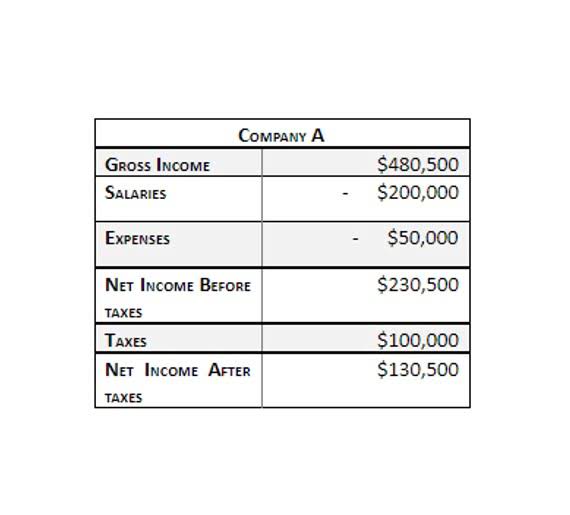
But you also have to manage all of your income for tax purposes at tax time. Gross income is different from net income, which is the total revenue that a business earns after all expenses get deducted. The gross vs net total of your earnings, or the total sum of money that you can receive from all of your sources combined, is known as your income.

Portfolio or Investment Income
- You can either go by a calendar year, which is January through December, or a fiscal year, which the federal government defines as October through September.
- There are no guarantees that working with an adviser will yield positive returns.
- You can calculate your annual income by adding up all of your sources of income for the year.
- Knowing the maximum yearly earnings and how to compute them is essential to evaluating the standing and sustainability of individual or corporate accounts.
- Your income sources and overall financial situation help lenders determine your credit risk.
- It’s usually measured over a 12-month period, either a calendar year (January to December) or your employer’s fiscal year if that differs.
- Alternatively, you may calculate annual income for a business’s fiscal year.
Include any regular bonuses, commissions, or additional compensation expected each year. Combine them with gross salary to accurately show annual gross revenue. On average, a full-time employee works about 2,080 hours per year. This estimate is based on a 40-hour workweek multiplied by 52 weeks. If you work part-time or have a different schedule, the total hours https://www.bookstime.com/ will differ.
What is annual salary?
Commissions can be earned from any source of income, including part-time jobs, freelance work, profitable equity market investments, and more. Side hustles can help you generate additional annual net income by providing a variety of earnings sources. Some types of income don’t need to be reported on your income tax return, because you won’t owe taxes on them. That includes certain types of income from state and municipal bonds, some Social Security benefits, certain inheritances and gifts, and some life insurance payouts.
Ways to Turn Your Small Town Business Into a Local Success Story
- Accurately calculating your annual salary involves several best practices.
- Your total pay can vary depending on the number of hours worked each week or any overtime hours.
- Calculating salary, especially for those with fluctuating hours or pay periods, becomes an art as much as it is a science.
- You can use a tax calculator to estimate how much you will owe in taxes.
There are other sources of income that you should take into consideration when calculating your annual income. And divided into paychecks throughout the year, as your total earnings within a fiscal year before taxes. Independent contractors and freelancers often have to make estimated annual income means tax payments every quarter.

Think of it as the grand total of your income from every source combined. This total income includes everything from your primary annual salary to earnings from a side gig. It’s a critical number because it determines your capacity to save, spend, and invest. Grasping what your annual income truly represents is the key to taking control of your financial journey and working toward the life you want.

Some salaried employees might be paid biweekly, which provides consistent income throughout the year and allows for better financial management of taxes and benefits. An annual salary can include a base salary, potential for overtime pay, and various other forms of compensation that contribute to an employee’s total annual income. Calculating salary, especially for those with fluctuating hours or pay periods, becomes an art as much as it is a science. It’s not just about what an employee earns in one pay period but about the total compensation package throughout the year. Your net annual income, often called take-home pay, is what’s left after taxes and other deductions are removed from your paycheck. These deductions can include federal and state income taxes, Social Security, health insurance premiums, and retirement contributions.
Mortgage underwriters and personal loan officers rely heavily on Gross Income to calculate crucial debt-to-income (DTI) ratios. Lenders often prefer a DTI ratio at or below 43% for conventional loan qualification. This ratio is calculated using the Gross Income figure before tax obligations are considered. AGI is Gross Income minus these adjustments permitted under Internal Revenue Code Section 62. This figure is a threshold used for calculating eligibility for tax benefits like the Child Tax Credit.